
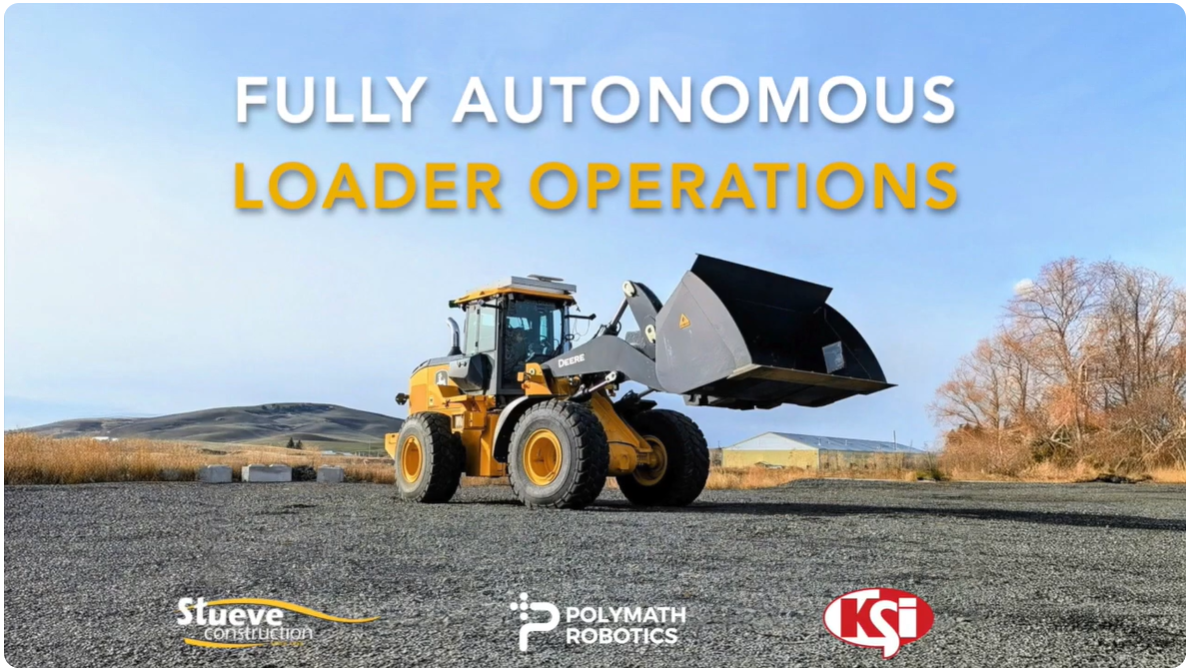
Stueve FAST
Fully Autonomous Smart Terminal for the Future of Fertilizer Operations
The fertilizer industry is changing. Agribusinesses are being asked to do more with fewer people, longer seasonal demands, tighter delivery windows, and higher expectations for accuracy and efficiency. Access to reliable labor has become one of the industry’s most pressing operational challenges, leading to reduced hours of operation, order fulfillment errors, and increased expenses related to employee turnover. Stueve FAST was developed to help address that challenge by bringing automation to the dry fertilizer plant environment.
Stueve FAST, the Fully Autonomous Smart Terminal, is designed around a clear goal: to help automate key dry fertilizer building functions while reducing the need for operators to work directly in higher-risk areas of the facility. The system is being developed to support the movement of material inside a dry fertilizer building, including bin-to-scoop activity, loader navigation, dumping into designated floor hoppers, and communication with fixed equipment automation.
Why Automation Matters in Dry Fertilizer
For ag retailers, cooperatives, and fertilizer terminals, labor availability is no longer just a staffing issue. It directly affects customer service, hours of operation, employee safety, order accuracy, throughput, and profitability. A dry fertilizer plant depends on consistent product movement, accurate blending, reliable loadout, and efficient inventory management. When labor is limited, those daily functions can become bottlenecks.
Stueve FAST is being developed as a practical step toward autonomous fertilizer operations. Rather than replacing the entire plant process at once, the concept focuses on automating specific, high-impact activities inside the dry fertilizer building. The presentation identifies receiving, inventory, reclaim, blending, mixing, custody transfer, loadout, and impregnation as key areas of the fertilizer operation where automation maturity can be evaluated and expanded over time.
How the System Works
The Stueve FAST concept connects autonomous loader movement with facility automation and order processing. The system is designed so instructions can be sent to the loader, including bin location and dump location. From there, the loader travels to the designated bin, picks a scoop of material, dumps that material into a designated floor hopper, and then returns to a waiting location for the next instruction. A remote operator can take control of the loader when needed.
This creates a pathway toward a more connected fertilizer facility where the loader, bins, equipment controls, inventory systems, and order-processing platforms can work together. The goal is not simply automation for automation’s sake. The goal is to help fertilizer operations improve safety, increase consistency, reduce manual dependency, and create new ways to fulfill customer demand.
Built Through Industry Collaboration
Stueve Construction has been working on this autonomous dry fertilizer building concept since 2022. The development process has included a vision for a fully autonomous building, partner engagement, bin mapping work, client roundtables, board-level investment approval, and the formal kickoff of Project Scoop in July 2025.
The project brings together specialized partners focused on vehicle automation, loader instructions, fixed equipment automation, ERP/order processing integration, and bin mapping. These areas are critical because autonomous fertilizer handling requires more than a machine that can drive. It requires an integrated system that understands facility layout, product location, equipment status, material demand, and the work sequence needed to complete an order safely and efficiently.
Key Technology Areas
Stueve FAST is being developed around several core technology areas:
Autonomous Navigation
The system has demonstrated the ability to send a point to the robot and navigate to the destination, showing the potential for autonomous movement within the facility environment.
Bucket and Boom Control
Testing has included sending a sequence of bucket control commands and executing those commands with no driver present. Development has also focused on raising the bucket, dumping material into a floor hopper, refining boom height, improving dump position, and reducing material spillage.
Localization and Facility Mapping
The project has generated a map of the facility, helping reduce risk associated with localization. This is an important step for autonomous operation inside a dry fertilizer building, where equipment must understand its position relative to bins, hoppers, structures, and travel paths.
Bin Scanning and Inventory Visibility
LIDAR sensor technology is being used for two purposes: mapping location for scoop activity and measuring bin volume. The presentation identifies bin volume measurement within 1% accuracy and notes that the bin scanner is ready for implementation.
Designed for Fertilizer Operations
A dry fertilizer plant is a demanding environment. Product piles change shape, bins vary in volume, traffic patterns shift, and seasonal pressure can place intense demands on equipment and employees. Stueve FAST is being developed specifically around this operational reality.
The project roadmap includes autonomous navigation, automated dumping, autonomous picking, error handling and retry logic, improved bucket fill efficiency, and full-cycle testing from scoop to drive to dump and repeat with minimal operator involvement.
A Smarter Path Forward for Ag Retailers
For fertilizer retailers and cooperatives, the potential value of autonomy goes beyond reducing labor strain. It can support better consistency, improved inventory management, safer operating conditions, increased uptime, and more efficient order fulfillment. Preliminary project estimates identify possible value areas such as employee cost reduction, loader operational savings, quality improvement, increased sales capacity, and inventory management savings.
As the industry continues to evolve, the most successful fertilizer operations will be those that can combine durable infrastructure, smart automation, accurate inventory data, and dependable service. Stueve FAST represents a step toward that future.
Building Solutions for Now and the Next Generation
Stueve Construction has long focused on building fertilizer facilities that serve the needs of today’s agribusinesses while preparing them for the next generation of operational demands. Stueve FAST continues that commitment by exploring how autonomy can be applied inside the dry fertilizer plant.
The future of fertilizer handling will require more than larger buildings and faster equipment. It will require smarter facilities, better data, safer workflows, and integrated systems that help agribusinesses serve customers with greater speed, accuracy, and confidence.
Stueve FAST is being developed to help make that future possible.
Are you Ready?
Ready to explore how automation, facility design, and long-term operational planning can improve your fertilizer business?
Contact Stueve Innovation, LLC to learn more about the future of dry fertilizer facility innovation and how Stueve FAST may help shape the next generation of ag retail operations.
Build with confidence. Build for the future. Build with Stueve Construction.
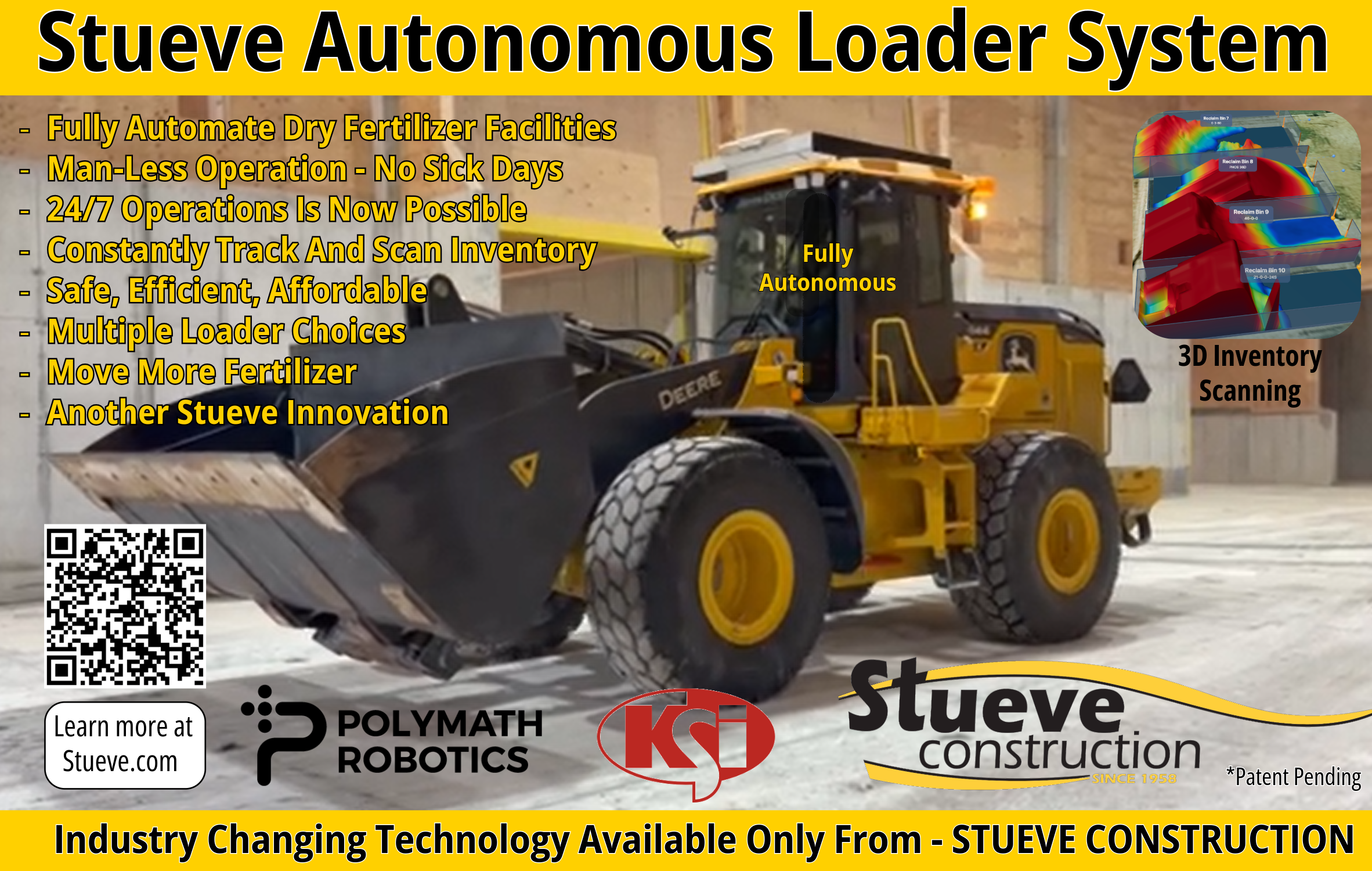
Patent Notice: Stueve Innovation, LLC has filed a U.S. patent application covering material aspects of its integrated autonomous fertilizer handling and warehouse system, including its autonomous loader navigation, bucket and boom control, and bin-scanning inventory methods.
About Stueve Innovation, LLC
Stueve Innovation, LLC is the newly formed technology affiliate of Stueve Construction, LLC, established to operate FAST and other next-generation automation technology for agricultural retail facilities. Stueve Innovation is operating the initial rollout of the patent-pending FAST autonomous fertilizer warehouse platform, beginning with six ag retail locations.