
Rigging is a critical part of many tasks on our jobsites. Whether you’re lifting wall panels, trusses, floor systems, roof components, or large glulams, using the correct rigging method is essential to keeping everyone safe.
Improper rigging can cause a load to shift, slip, or fall unexpectedly, leading to:
- Serious injury or death
- Damage to equipment and materials
- Damage to the structure
- Project delays
- Costly repairs
Today’s focus is understanding the difference between basket hitches and choker hitches, and
knowing when each should be used.
Understanding the Difference
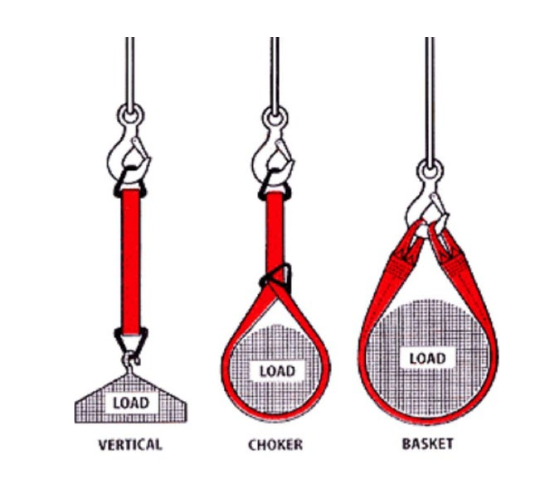
Basket Hitch
A basket hitch supports the load by wrapping the sling underneath it without tightening around
the material.
Advantages
- Distributes the load evenly.
- Provides greater sling capacity than a choker hitch.
- Helps reduce damage to finished materials.
- Works well when the load is stable and cannot shift.
Appropriate Uses
A basket hitch is a good choice when:
- The load is balanced and secure.
- There is little or no chance the material can slide through the sling.
- The load will remain level throughout the lift.
- The lift has been planned and evaluated for this configuration
Avoid Using a Basket Hitch When
- The load could slide or shift.
- One end of the material could become unsupported.
- The load may need to be tilted or repositioned during the lift.
- The hitch does not provide enough control for the lift being performed.
Remember: A basket hitch supports the load but does not grip it.
Chocker Hitch
A choker hitch wraps around the load and tightens as tension is applied.
Advantages
- Helps prevent the load from sliding.
- Provides better control during lifting.
- Works well when lifting long or irregular materials.
- Often the preferred choice when additional security is needed.
Appropriate Uses
A choker hitch is commonly used when:
- Lifting long members such as glulams or heavy timbers.
- The load could shift during the lift.
- Better control of the load is needed while positioning.
- The lift requires the material to remain securely captured in the sling.
Keep in Mind
Because the sling bends around the load, a choker hitch reduces the sling’s rated capacity.
Always ensure the sling being used has sufficient capacity for the load in the chosen hitch
configuration
Plan Every Lift
Before any material leaves the ground, ask yourself:
- Is this the correct hitch for this load?
- Can the material slide out of the sling?
- Will the load remain balanced throughout the lif
- Is the sling rated for this hitch configuration?
- Are all workers clear of the load path?
- Has everyone involved discussed the lift plan?
If something changes during the lift, stop and reassess before continuing.
Best Practices for Wood Framing
- Inspect slings, hooks, shackles, and other rigging equipment before each use.
- Remove damaged rigging equipment from service immediately.
- Protect slings from sharp edges when necessary.
- Keep loads as low as practical while moving them.
- Use tag lines when needed to control long or awkward loads.
- Never stand under or walk beneath a suspended load.
- Keep hands and body parts out of pinch points while guiding materials.
- Never exceed the rated capacity of lifting equipment or rigging.
- If you’re unsure about the proper rigging method, stop and ask before making the lift.