
Why This Matters
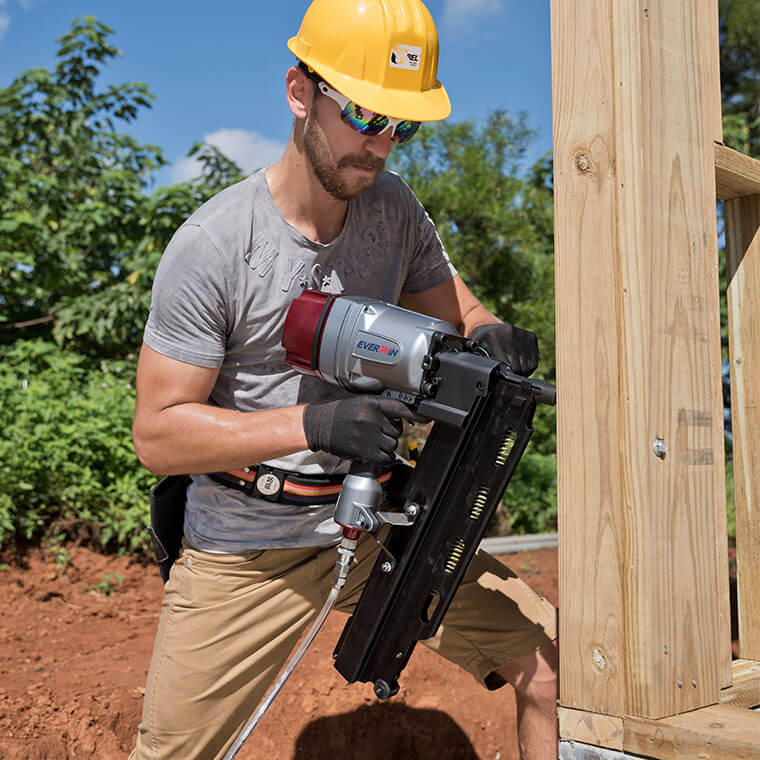
Air nailers are valuable tools for fertilizer plant construction that help us work efficiently, but they can also cause serious injuries when air hoses are damaged, improperly connected, or create tripping hazards. Many nail gun incidents involve factors beyond the tool itself, including the air hose supplying it.
A damaged or poorly managed air hose can lead to:
- Trips, slips, and falls
- Loss of control of the nail gun
- Unexpected tool activation
- Hose whip injuries from disconnected fittings
- Reduced air pressure and improper tool performance
Common Air Hose Hazards
Damaged Hoses
Before use, inspect hoses for:
- Cuts, cracks, or abrasions
- Blisters or bubbles
- Exposed reinforcement material
- Damaged fittings or couplers
Remove damaged hoses from service immediately.
Improper Connections
- Use fittings designed for the hose and tool.
- Ensure couplers are fully engaged and secured.
- Never use makeshift repairs such as tape, wire, or clamps.
Hose Whip
A hose under pressure can violently whip if it becomes disconnected.
To prevent hose whip:
- Inspect couplers before use.
- Verify connections are secure.
- Use safety clips or retention devices where required.
- Depressurize hoses before disconnecting.
Tripping Hazards
Air hoses are frequently run through walkways, ladders, and work areas.
To reduce trip hazards:
- Route hoses away from access paths whenever possible.
- Keep work areas organized.
- Avoid excessive hose lengths.
- Remove unused hoses from active work areas.
If you’re looking at your next fertilizer construction project, let’s sit down and look at the numbers. Visit www.stueve.com and talk to one of our sales professional or engineers.