
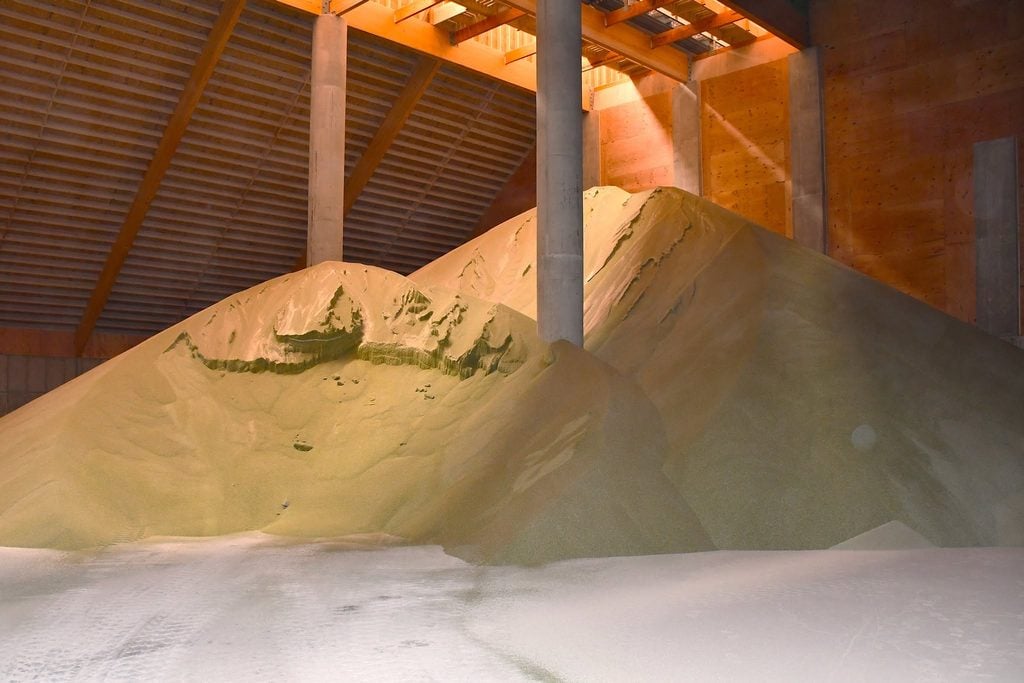
When planning a dry fertilizer storage facility, one of the most important questions is also one of the most practical: How much space does one ton of dry fertilizer actually take up? The answer depends on the type of fertilizer, its bulk density, particle size, moisture condition, and how it is stored. For agronomy professionals, cooperative managers, and operations teams, understanding fertilizer volume is essential for designing bins, planning storage capacity, managing inventory, and protecting a very valuable crop input.
Dry fertilizer is usually bought, sold, transported, and stored by weight. A ton is always 2,000 pounds. However, one ton of fertilizer does not always take up the same amount of space. A denser product takes up less space. A lighter product takes up more space. That means one ton of urea may require more storage volume than one ton of potash, even though both weigh exactly the same.
The Role of Fertilizer Density
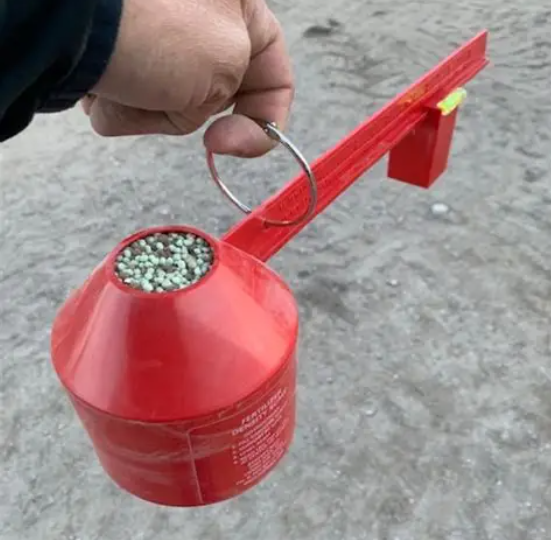
Bulk density is the weight of a product per cubic foot. In dry fertilizer, it is commonly measured in pounds per cubic foot. For example, if a fertilizer has a bulk density of 50 pounds per cubic foot, then each cubic foot of that product weighs about 50 pounds.
To estimate how much space one ton of fertilizer takes up, divide 2,000 pounds by the product’s bulk density.
For example:
One ton of urea at about 48 pounds per cubic foot takes up roughly 42 cubic feet.
One ton of MAP or DAP at about 60 to 62 pounds per cubic foot takes up roughly 32 to 33 cubic feet.
One ton of potash at about 70 pounds per cubic foot takes up roughly 29 cubic feet.
These differences matter. A fertilizer facility designed without considering product density may run out of usable storage space sooner than expected. A bin that holds a certain tonnage of potash may not hold the same tonnage of urea because urea is lighter and requires more cubic space per ton.
Approximate Space Needed Per Ton
While exact numbers vary by product source, granule size, moisture level, and handling condition, the following estimates are useful for planning:
| Fertilizer Product | Approximate Bulk Density | Approximate Space Per Ton |
|---|---|---|
| Urea | 48–50 lb/cu. ft. | 40–42 cu. ft. |
| MAP | 60–62 lb/cu. ft. | 32–33 cu. ft. |
| DAP | 60–62 lb/cu. ft. | 32–33 cu. ft. |
| Potash | 68–72 lb/cu. ft. | 28–30 cu. ft. |
| Ammonium Sulfate | 58–62 lb/cu. ft. | 32–34 cu. ft. |
| Blended Fertilizer | Varies by formula | Varies by ingredients |
This is why a dry fertilizer facility must be designed around more than just total tons. It must be designed around the actual products being stored, the expected blend recipes, the number of product bins, reclaim systems, loadout speed, and seasonal inventory demands.
Why Fertilizer Size and Granule Quality Matter
The physical size of dry fertilizer particles is just as important as the density. Fertilizer granules need to be compatible with the blending, conveying, and spreading systems used by the cooperative or retailer. If particles are too fine, dusty, inconsistent, or easily crushed, they can create handling problems, segregation, bridging, caking, and uneven spreading patterns.
Granule size also affects blend quality. Products with similar particle sizes generally blend and spread more consistently. When particles vary too much in size or density, heavier or larger particles may separate from lighter or smaller particles during handling, transportation, or application. That can create inconsistent nutrient distribution across the field.
For agronomy professionals, this is a serious concern. The goal is not just to move fertilizer quickly. The goal is to deliver the right nutrient blend accurately and consistently to the grower’s field. That begins with proper storage, careful handling, and facility design that respects the physical characteristics of each fertilizer product.
Why Storage Capacity Must Be Planned Carefully
A dry fertilizer building is not just a warehouse. It is a working agronomy system. Every cubic foot of storage space has value. Every bin must be sized with the right product in mind. Every conveyor, leg, blender, and loadout system must support the movement of dense, abrasive, and often time-sensitive crop nutrients.
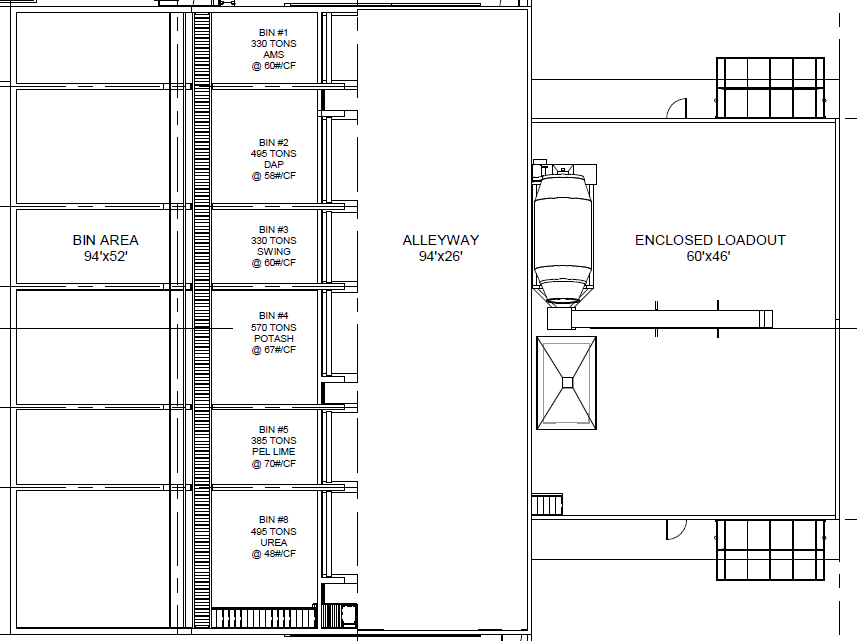
If a cooperative wants to store 5,000 tons of dry fertilizer, that does not mean one simple volume calculation will work for every product. A facility storing mostly urea will need more cubic space than a facility storing mostly potash. A facility storing multiple products for custom blending needs enough separated storage to maintain product quality and operational flexibility.
This is especially important during peak spring and fall seasons. When trucks are waiting, applicators are moving, and growers need fertilizer immediately, poor storage planning can create bottlenecks. Properly sized bins and well-designed material flow help operations teams keep up with demand.
The Cost of Fertilizer Makes Storage Even More Important
Dry fertilizer is a major investment. Depending on the product and market conditions, fertilizer can range from approximately $400 to $900 per ton. At those values, a single 1,000-ton storage area may represent $400,000 to $900,000 worth of inventory.
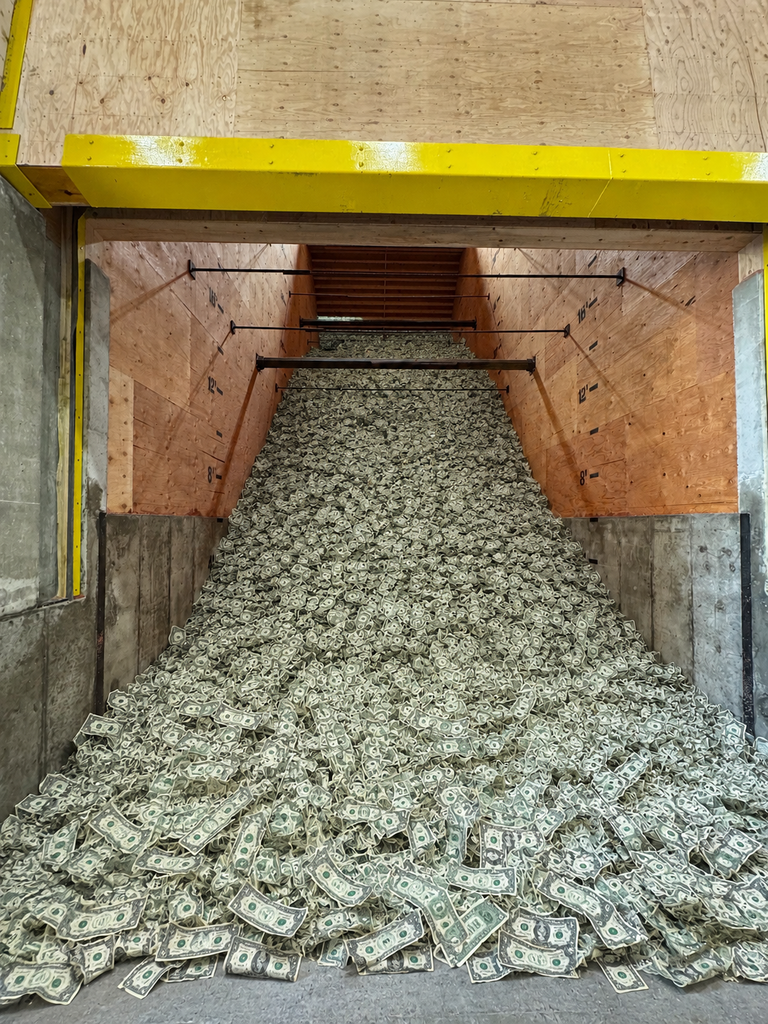
That changes how a facility should be viewed. Fertilizer storage is not just about holding product. It is about protecting a high-value asset. Moisture intrusion, contamination, poor reclaim, blending errors, and inefficient handling can all create costly losses. When fertilizer prices are high, every ton matters. Every spilled, caked, degraded, or mishandled ton affects profitability.
For farmer cooperatives and ag retailers, a properly designed dry fertilizer facility helps protect inventory value while improving the ability to serve growers. The better the facility, the better the operation can manage seasonal demand, product quality, and working capital tied up in fertilizer inventory.
Better Fertilizer Facilities Support Better Agriculture
Modern agriculture depends on accurate nutrient management. Growers rely on their local cooperative or ag retailer to provide fertilizer that is available, consistent, and delivered on time. That requires facilities designed around real-world agronomy operations.
Understanding how much space one ton of dry fertilizer takes up is a basic but critical part of that planning. Density, granule size, storage volume, bin design, and product flow all affect how well a fertilizer facility performs. When those details are handled correctly, the result is faster service, better blend quality, stronger inventory control, and improved confidence during the busiest times of the year.
A well-designed dry fertilizer facility helps make agriculture better by supporting timely nutrient delivery, reducing operational delays, protecting valuable product, and giving farmers the dependable service they need to produce strong crops. In today’s agricultural environment, storage capacity is not just a construction detail. It is a competitive advantage.

Stueve Construction is an experienced design-build construction company specializing in agribusiness, fertilizer, and crop nutrient facilities. Since 1958, the company has served the agricultural industry by designing and constructing facilities that support fertilizer storage, blending, handling, and distribution. With more than 1,500 completed fertilizer and agribusiness projects, Stueve Construction brings a long record of industry-specific knowledge, engineering experience, and practical construction expertise to agricultural infrastructure projects.