
By J.C. Remsberg, CCA
Mixing of different fertilizers and cause problems in the blending and storage facility. Consider the compatibility of the products you use in your operations.
Here is the chemistry behind Ammonium Nitrate and Urea and why it gets so soupy in fertilizer plants.
Urea + Ammonium Nitrate = Carbon Dioxide (gas) + Water + Dinitrogen (gas)
CH4N2O + 3NH4NO3 → CO2 + 8H2O + 4N2
If we get some samples and mix them and you will see what happens.
Take 1 handful of Urea and 3 handfuls of AN – It makes CO2 Gas, a lot of water and Nitrogen gas –
Bottom line- very small amount of Urea will mess up a blend with AN fast.
Fertilizer Compatibility Chart
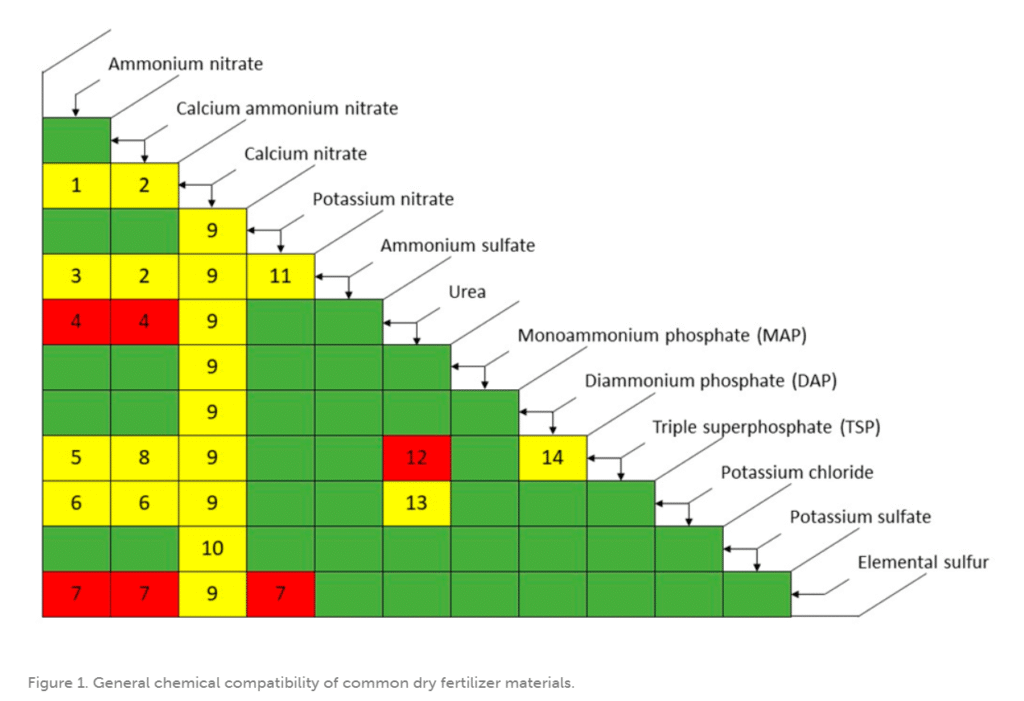
The chart shows that intersections of two fertilizer materials that produce green cells are compatible and can be mixed without too much concern.
Intersections of two fertilizer materials that produce yellow cells may be mixed if consideration is given to the comments that accompany the risks of mixing those materials.
Intersections of two fertilizer materials that produce red cells should not be mixed.
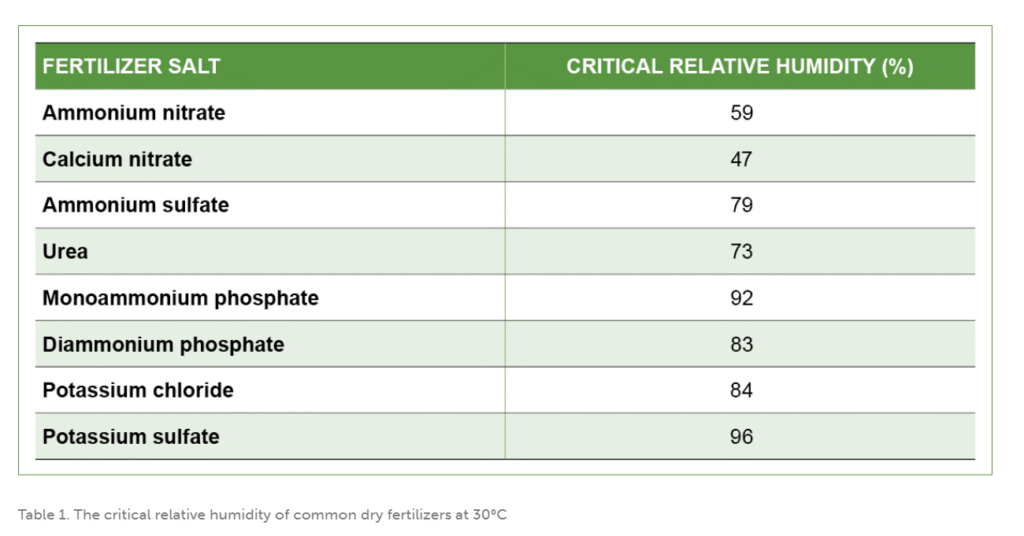
The critical relative humidity level is the humidity above which a fertilizer material or blend will absorb moisture from the air.
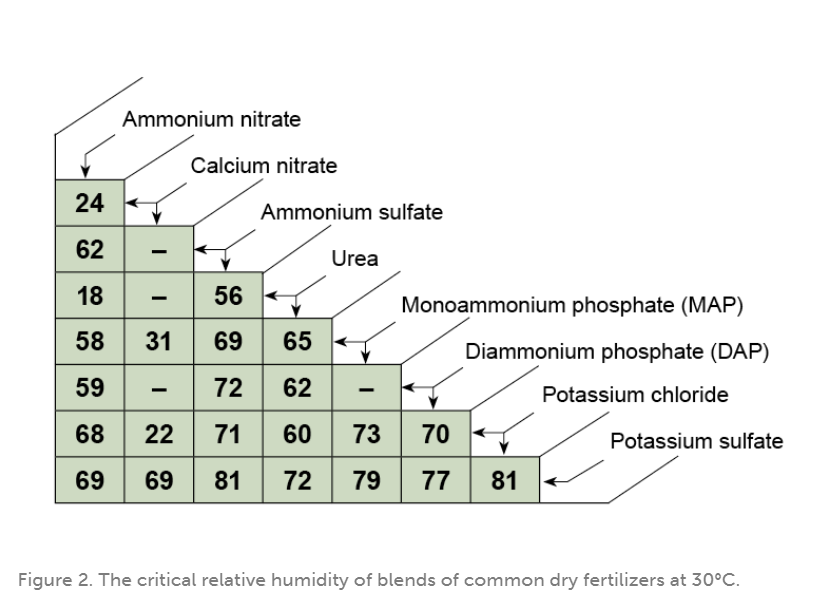
Heated floors will not work if you have the 2 together – You can see in the compatibility chart above, at 18% RH it turns to water. It will turn to soup even if you store it in another building when it hits the blender and spreader… cutting it with AMS may help, but you’re going to have a mess if urea is in the blend, especially with different SGN’s
Learn more about fertilizer compatibility from The Fertilizer Institute
Follow Stueve Construction for the best in fertilizer blending and Storage building solutions.